
Europe Ecology / Distribution
“Gulo populations in Europe shrank northward toward the most remote and rugged refugia. Today, Norway and Sweden each hold 300 to 350. Finland, where more than 6,000 were killed over the past 150 years, has 50 to 150 left. Russia is believed to support the most wolverines. It ought to, considering that this northern nation spans 11 time zones.”
Europe
NORWAY
The overall wolverine population in Norway is approximately 375–400 individuals, anincrease over the last few decades. While the present population is relatively stable, these are lower numbers compared to historic levels. Wolverines in Norway are mostly found along the border with Finland and in the Central Scandinavian Mountains.
Like all wolverines across their global range, their typical habitats in Norway include alpine tundra and high mountains, alpine and boreal forests, and snow-covered rugged terrain. A major winter food source in Norway is the reindeer, as well as the fresh kills and carcasses of other large ungulates. And like all wolverines, in Norway they will feed on smaller mammals, birds, eggs, and even plant material when necessary.
SWEDEN
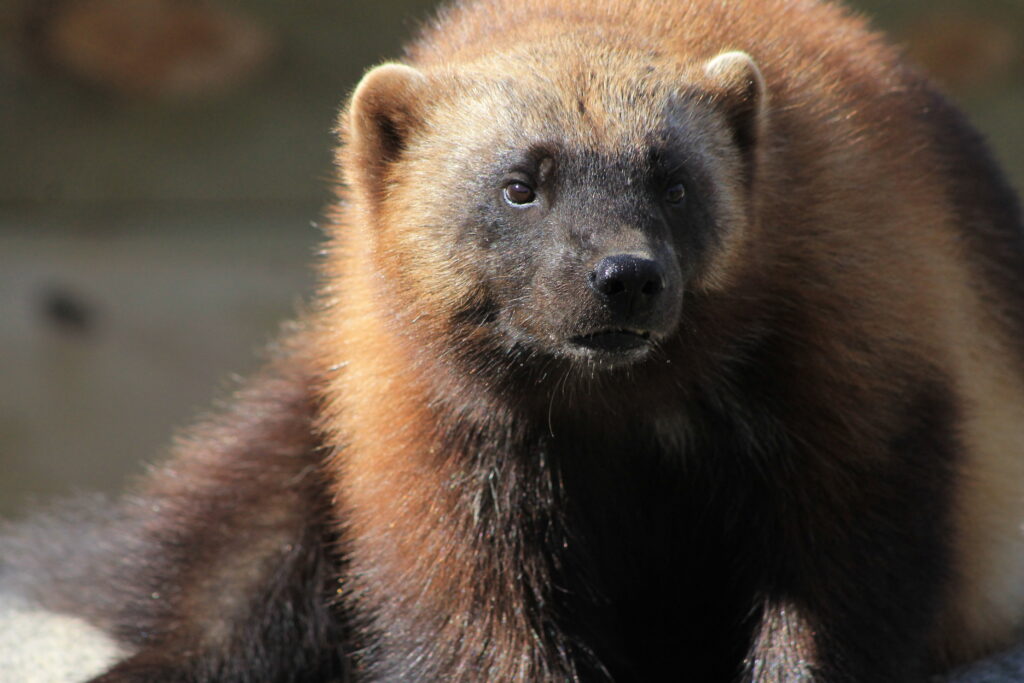
Prior to wolverines receiving new management protections in 1969, the population was very low. However, the species has gradually recovered and population estimates from 2024/25 show there are about 700 wolverines in Sweden. This is an increase from around 655 recorded in the previous count. Other sources approximate Sweden’s wolverine population between 572–891 animals. Either way, the population consistently meets or exceeds the national reference minimum of 600 individuals considered necessary for favorable conservation status.
As to be expected, wolverines are primarily found in boreal (taiga) forests, alpine tundra, snow-coveredlandscapes, and rugged terrain. Also to be expected, wolverines in Sweden primarily feed on the recent kills and carcasses of reindeer, the remains of animals leftby other predators, smaller prey like rodents, hares, birds as needed, and evenberries or insects in the summer months.
FINLAND
Wolverines in Finland are part of the Karelian subpopulation, which is primarily located in east-central Finland and extends across the border into the Russian Karelia region. The population is concentrated in eastern and northern Finland, especially in less disturbed boreal forests and subarctic areas. In recent years, wolverines have expanded their range south into historically occupied areas, but these remain rare events.
Estimates from early 2024 suggest there are roughly 350–500 wolverines in Finland, a significant increase compared to the late 20th century. Despite this growth, wolverines are still considered endangered in Finland due to the species’ small and fragmented population, low genetic diversity, and vulnerability to human impacts.
Wolverines in Finland occur across a range of northern and boreal landscapes, including borealforests, peatlands and wilderness areas, and subarctic areas above the treeline or near alpine-like environments. In terms of their diet, wolverines in Finland scavenge on the carrion of moose and reindeer killed by wolves or that died naturally. Smaller mammals such as hares, grouse, rodents are also part of the diet, especially where large ungulates are less common.
Russia and Siberia
Russia supports some ofthe largest wolverine populations across their present range, especially in Siberiaand the Russian Far East. This makes Russia one of the global strongholds for wolverines. A widely cited estimate places the total wolverine population in Russia at around 17,000 individuals, with most of these in Siberia and the Russian Far East. Populations in European Russia are smaller and have been affected historically by hunting and ungulate declines. Specifically, European Russia (west of the Urals) has relatively few individuals, there are “Intermediate densities”of wolverines in Western Siberia, and the core population centers are in Eastern Siberia and the Russian Far East.
Wolverines in Russia use a variety of cold-region habitats, including boreal taiga forests, subarctic tundra and forest-tundra ecotone, mountainous areas, and peat and marsh wetland complexes. In terms of food, the carrion of large ungulates like reindeer, elk and deer makes up the major share of their diet year-round, much of it killed by wolves, bears, or lynx. During the summer months, wolverines also hunt hares, rodents, other small-to-medium mammals and birds (supplemented by berries,nuts, fungi, and vegetation).