
EDUCATION
The following is a list of zoos and other educational programs from around the globe that focus some of their public education and awareness building efforts on wolverines.
Asia
None that we could find. Please let us know of zoos or other educational programs for wolverines in Asia we might have missed in our research.
Europe
European Association of Zoos and Aquaria (EAZA): Facilitates conservation education and species preservation programs across Europe, including carnivore awareness and research initiatives that can include wolverines.
Boreal Wildlife Centre (Kuhmo/Suomussalmi, Finland): Renowned for being able to see wolverine in their natural habitat, including having camouflaged hides where photographers and tourists can view this and other large, wild, free-roaming predators.
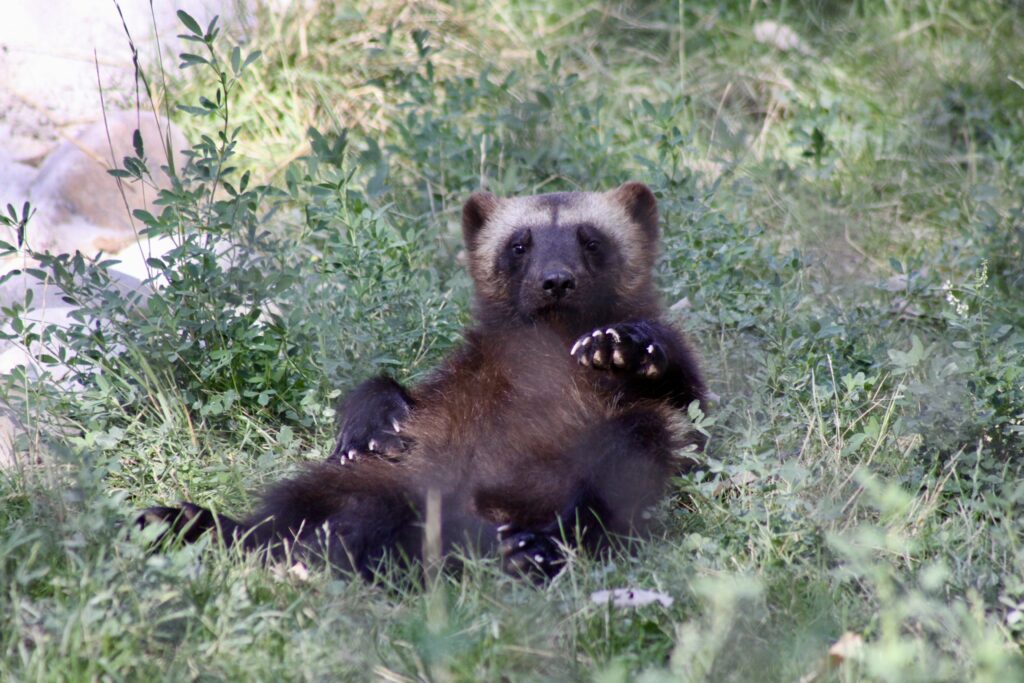
Borås Djurpark (Borås, Sweden): Home to wolverines among other Nordic carnivores such as lynx, wolves, and brown bears, with the park highlighting the species’ ecology and conservation.
Bristol Zoo Project (Bristol, UK): Has a family of wolverines located in an exhibit area that highlights species that were once native to British woodlands (including European brown bears, wolves, and lynxes).
Budapest Zoological & Botanical Garden (Budapest, Hungary): The zoo has Ottó the wolverine.
Dierenpark Zie-ZOO (Volkel, Netherlands): The zoo featuring wolverines in a natural setting exhibit.
Gaiapark Kerkrade Zoo (Kerkrade, Netherlands): Has a natural habitat exhibit for wolverines in the Tundra themed area.
Korkeasaari Zoo (Helsinki, Finland): Their wolverines are part of the zoo’s collection of Finnish indigenous species, the European Endangered Species Programme, and ex-situ conservation efforts.
Nordens Ark (Sotenäs, Sweden): Nordic wildlife park with Eurasian wolverines and other European carnivores that emphasizes education and conservation.
Novosibirsk Zoo (Novosibirsk, Russia): The zoo is known for having a successful breeding program for wolverines and has sent wolverines to other institutions.
Petola Visitor Centre (Kuhmo, Finland): Wolverines are part of a large carnivore education centre with permanent exhibition covering Finland’s four large carnivores, wolverines, bears, wolves, and lynx.
Polar Park (Bardu, Norway): Has a Nordic fauna centre which features Norway’s four largest predators, including the wolverine.
Ranua Wildlife Park (Ranua, Finland): The wolverines are part of the zoo’s Arctic animal collection and includes a European Ex-situ Program (EEP) breeding programs.
Skansen Zoo (Stockholm, Sweden): Their wolverine is part of the zoo’s collection of Nordic wild animals, which are featured as part of the zoo’s conservation programs (including having successfully bred wolverines in the past).
Udmurt Republic Zoo (Izhevsk, Russia): Features the wolverine along with other Arctic and boreal animals.
Vildriket (Järvsö, Sweden): With a focus on native Swedish fauna, the zoo has a Nordic animal collection that includes wolverines and other carnivores.
Whipsnade Zoo (Dunstable, UK): Wolverines are featured in Europe section, part of the zoo’s international science-driven conservation efforts working to restore wildlife in the UK and around the world interpretive species displays.
Zoo Opole (Opole, Poland): The zoo has a wolverine exhibit as part of a broader set of specialized carnivore exhibits.
Zoosad Priamurskiy (Khabarovsk, Russia): The zoo is known for exhibiting fauna native to the Far East Russian region, where wolverines are naturally found.
Zoo Salzburg (Salzburg, Austria): The wolverine exhibit features Eurasian wolverines integrated into their Europe/Alpine mammal section.
North America
Canada
Zoo Sauvage de St‑Félicien (Saint-Félicien, Quebec): Displays wolverines along with a variety of north temperate carnivores native to Canada.
Parc Omega (Notre-Dame-de-Bonsecours, Quebec): Wolverines are part of the drive-through wildlife experience, alongside other native species.
UNITED STATES
Alaska Zoo (Anchorage, AK): Has a wolverine exhibit which includes specialized breeding and denning spaces for the wolverines.
Columbus Zoo and Aquarium (Powell, OH): Features wolverines in its North America Trek section, with education programs on mustelids and their ecology.
Detroit Zoo (Royal Oak, Michigan): Features a breeding pair of Eurasian wolverines in its American Grasslands habitat.
Henson Robinson Zoo (Springfield, Illinois): Recently welcomed a Eurasian wolverine as part of an international conservation program focused on maintaining a genetically strong captive population as wolverine populations in the wild continue to decline.
Minnesota Zoo (Apple Valley, MN): Hosts wolverines (including both North American and Eurasian subspecies) as part of its exhibits and supports field research and community education on wolverine ecology and monitoring.
Northwest Trek Wildlife Park (Eatonville, WA): Houses and exhibits native wolverines with educational materials about their biology and ecology.
San Francisco Zoo & Gardens (San Francisco, CA): Has a wolverine exhibit and promotes the wolverine through “pop-up” public education and outreach programs.
Zoo Boise (Boise, Idaho): Home to a wolverine named Laura, conducts education programs about wolverines.
ZooMontana (Billings, MT): Has wolverines and plays a role in breeding wolverines for kits that then get transferred to other zoos for conservation and education.